
Losing Hair After Losing Weight: 5 Things Most Women Are Never Told
The weight is finally coming off, and the drain catch is filling up. For women past 45 who have had bariatric surgery or take a GLP-1 medication, the two arrive together far more often than anyone warns them. Here are the five things worth knowing before assuming the worst.
 By Marla Whitfield·July 6, 2026
 Estimated 5-7 Minute Read
The Shedding Has a Name, and It Is Not Damage
It shows up a few months into the loss: more strands in the brush, a fuller drain catch, hair on the pillow that was never there before. The timing feels random. It is anything but.
At any given moment, roughly 85 to 90 percent of scalp follicles are in their growth phase, and the rest are resting. A major metabolic shift, and rapid weight loss is one of the biggest, flips an unusual number of them into that resting phase at once. Resting follicles hold their strands for about three months before releasing them, which is why the shedding seems to arrive out of nowhere months after the trigger. Clinicians call the pattern telogen effluvium.
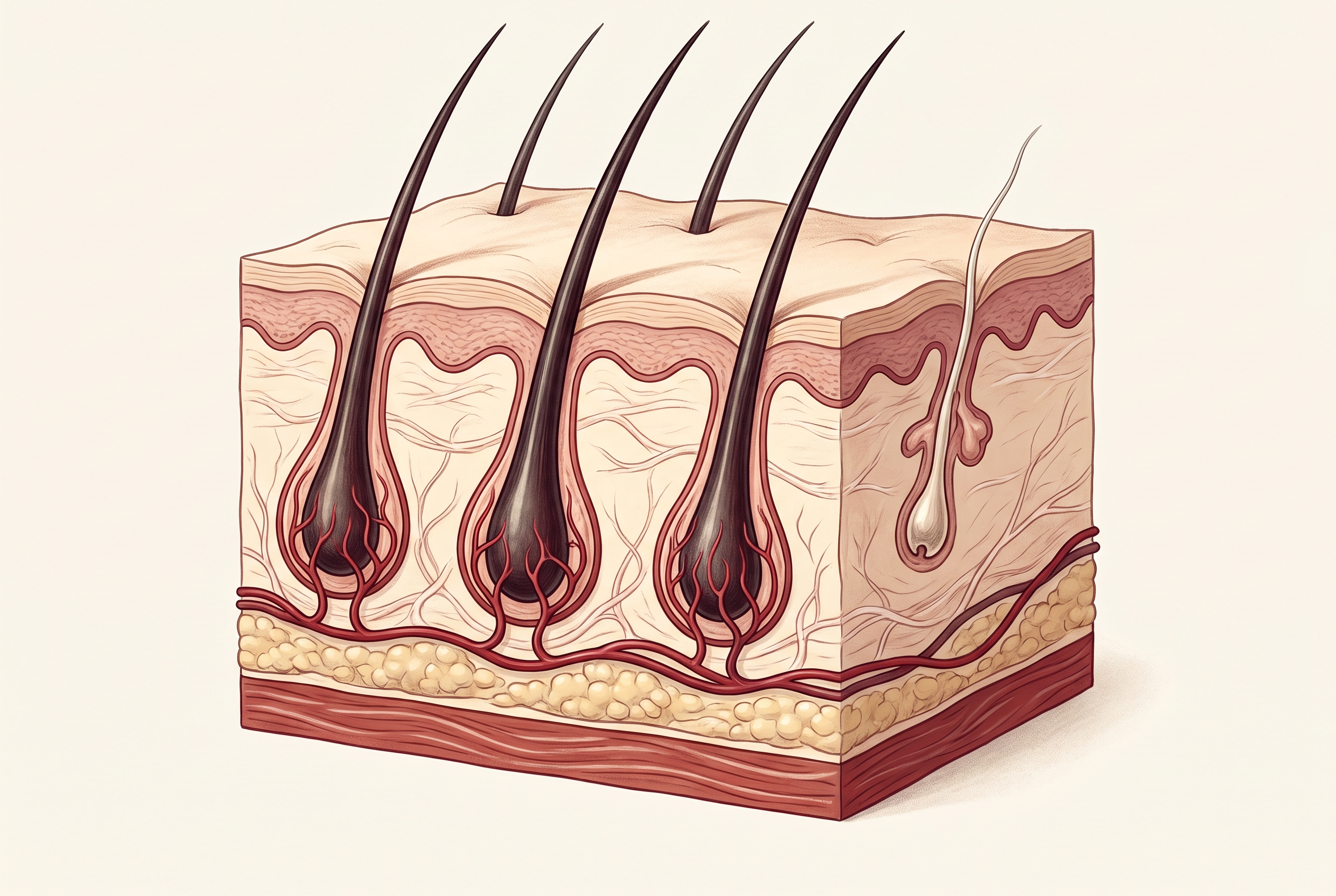
Research note: In a normal scalp about 85 percent of follicles are growing and 15 percent are resting. Telogen effluvium is the shift of an unusually large share into that resting group at once, which is why the shedding is delayed rather than immediate.
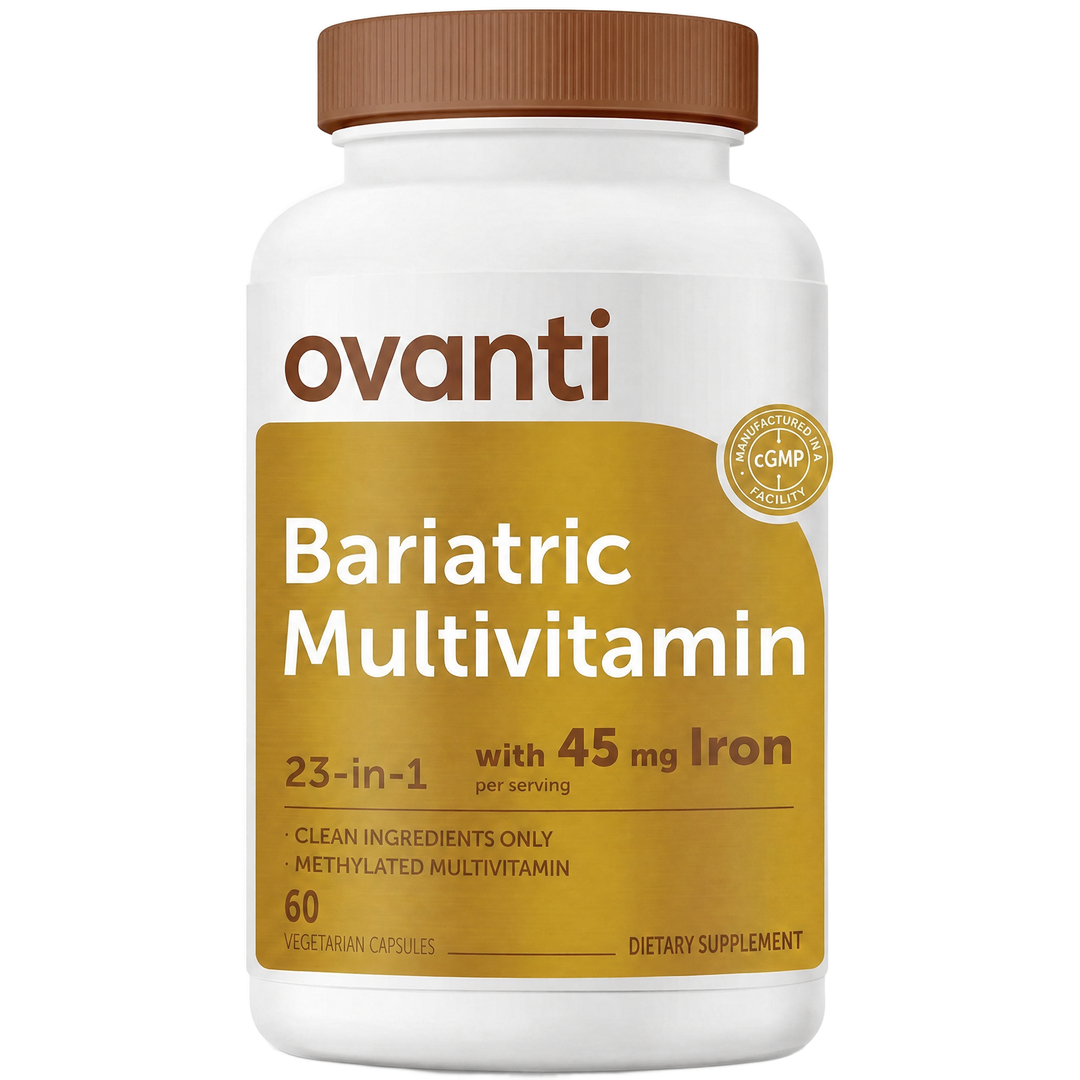
Shedding after weight-loss surgery is common rather than exceptional, and it is also reported by people taking GLP-1 medications. The follicle is not broken. In most cases it is undersupplied. That supply story is what Ovanti, a 23-in-1 methylated multivitamin formulated for post-bariatric and GLP-1 bodies, was built around, and it is the story the next four points explain.
Follicles Are Last in Line for Nutrients
After surgery, or on an appetite-suppressing medication, she is simply eating far less. That is the point of both. What gets less attention is how the body divides up the smaller supply that comes in.
The body triages. Heart, lungs, red blood cells and immune cells get funded first. Hair is high-turnover, non-essential tissue, so when the incoming stream of iron, zinc and B-vitamins narrows, the follicle budget is the first line cut. The shedding that follows is not a scalp problem. It is a supply problem that starts several steps upstream, in a digestive tract taking in less and absorbing differently than it used to.

Ovanti treats it as exactly that: twenty-three nutrients in one daily serving, dosed for a body that takes in less food than it used to, so the triage list gets funded all the way down to the follicle.
For Women Over 45, Check the Iron Story First
Iron is the quiet driver in this age group. Decades of monthly loss, then a digestive re-route that changes where iron is absorbed, leave many women running low on ferritin, the storage form of iron, with nothing more dramatic to show for it than feeling cold, tired and watching more hair leave than arrive.
Follicle cells are among the fastest-dividing cells in the body, and dividing cells burn iron. When ferritin runs low, the body reclaims iron from its lowest-priority tissue first, and that is the follicle again. Low ferritin shortens the growth phase, so strands exit early and regrowth starts thinner than what it replaces.
Research note: Ferritin, zinc and folate levels have each been linked to hair loss after weight-loss surgery in the published follow-up data, and the shedding is reported more often in younger women.
It is why Ovanti carries a full 45 mg of iron as ferrous bisglycinate, a form chosen to sit easy on the stomach, and pairs it with vitamin C in the same serving, because vitamin C meaningfully improves how much of that iron is taken up.
The Form on the Label Decides What Reaches the Follicle
Here is the part that surprises people: two supplement labels can list the same nutrients and behave very differently in the same body, because what matters after surgery or on a GLP-1 is the form each nutrient arrives in.
Most multivitamins are built on inactive forms, cyanocobalamin for B12 and folic acid for folate, which the body has to convert before it can use them. That conversion step is the one a re-routed or GLP-1-slowed digestive tract struggles with. The label reads complete while less of what is printed on it reaches the tissue that needs it.
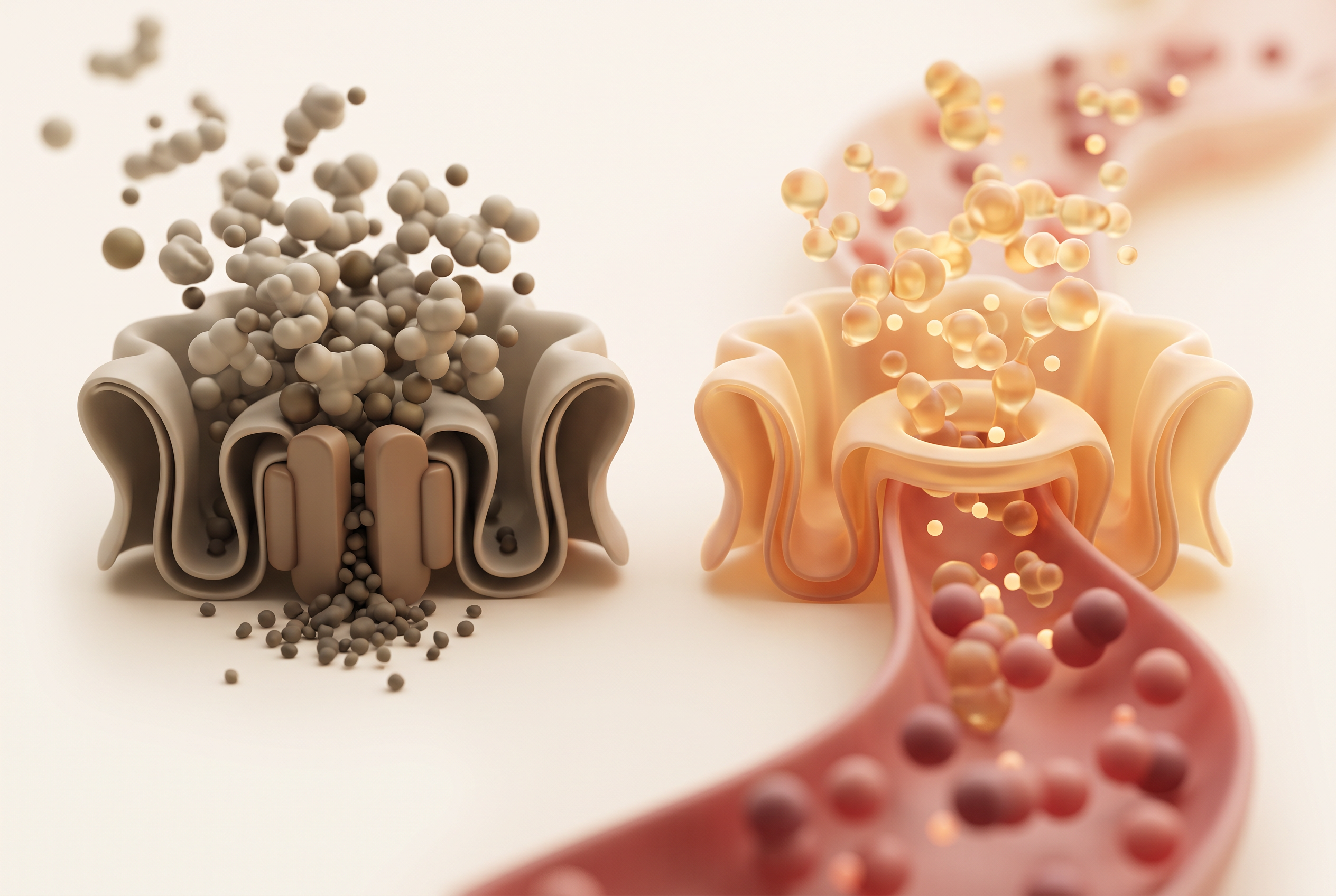
Methylated forms skip that step. Methylcobalamin, methylfolate (L-5-MTHF) and P5P arrive already active, ready for the follicle’s assembly line. Every B-vitamin in Ovanti is carried in its active form for exactly this reason.
Patience Is Half the Advice. Supply Is the Other Half.
“Give it time” is real advice, as far as it goes. A follicle that returns to its growth phase takes two to three months to show new growth at the scalp line. That timeline is biology, and no product changes it.
What she controls is whether the supply is there every day of that cycle. Growth-phase follicles need zinc for the enzymes that build the strand, biotin and B12 for keratin assembly, and iron for the dividing cells at the root, available continuously, because the follicle builds a little of the strand every single day.

Ovanti puts the whole panel in two small vegetarian capsules taken with a meal: 20 mg zinc picolinate, 800 mcg biotin, 1,000 mcg methyl-B12, 45 mg gentle iron and nineteen more, third-party tested and made without fillers. The routine takes ten seconds at breakfast.
Give the Follicles Their Supply Line Back
Summer Sale: up to 57% off Ovanti, the 23-in-1 methylated multivitamin with 45 mg gentle iron. Backed by a 30-day money-back guarantee.
TRY OVANTI RISK-FREE